
For the woman who learned to be good before she learned to be herself.
Therapy for Asian women who look capable on the outside but feel anxious, unseen, guilty, or tired of living as the version everyone expects.
Maybe you became responsible early. Maybe you learned to read the room, keep the peace, honor your family, work hard, stay grateful, and not need too much. But somewhere along the way, your own voice got quieter.
You do not need perfect words. Start with what feels heavy.
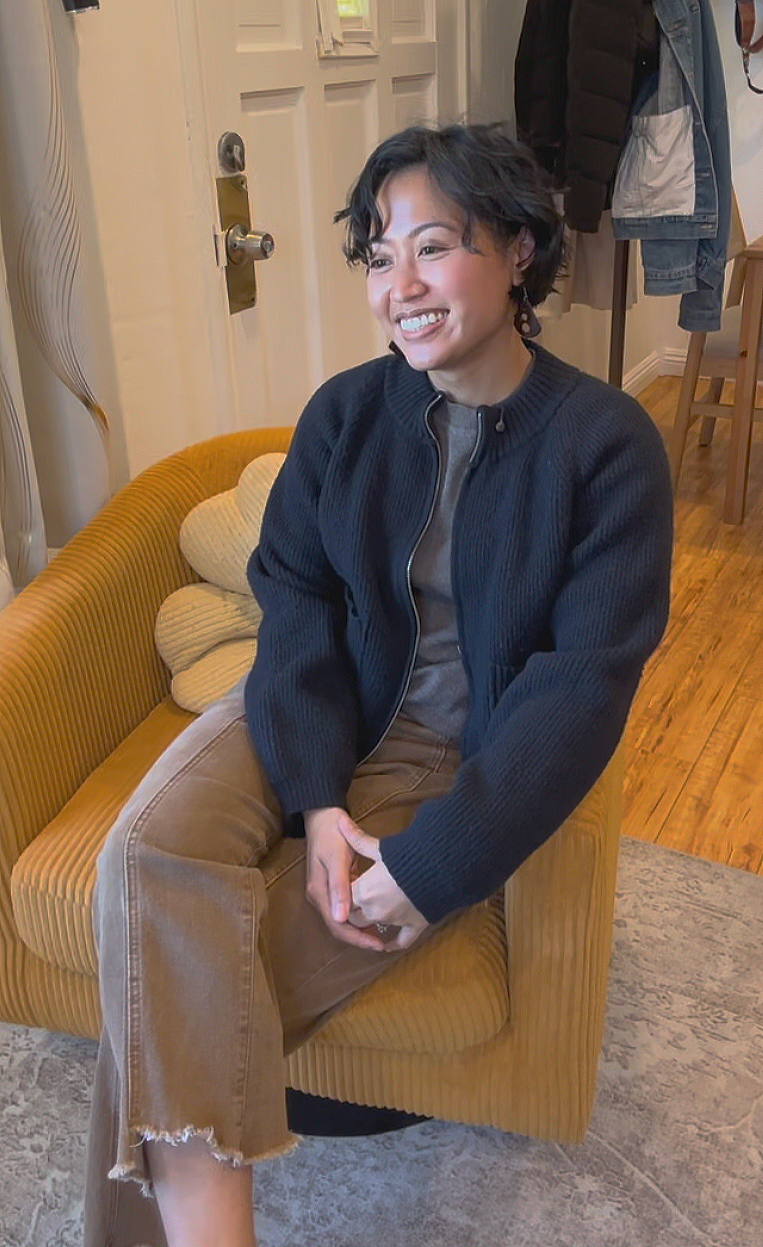
Filipina American therapist helping Asian women become whole, not just good.
You became easy to love. But it cost you.
You learned how to be thoughtful, respectful, high-achieving, grateful, helpful, and composed. People may admire how responsible you are. But inside, you may feel anxious, resentful, lonely, tired, or unsure who you are when you are not taking care of everyone else.
You feel guilty for having needs.
You may question yourself every time you want rest, space, honesty, support, or a life that looks different from what your family expected.
You are tired of being the good one.
The dependable one. The calm one. The grateful one. The one who understands everyone else before anyone has to understand her.
You keep shrinking your truth.
You know something needs to change, but saying it out loud can feel selfish, dramatic, disrespectful, or too late.
You can love your family and still need room to breathe.
You can honor sacrifice and still tell the truth about pressure. You can care about your parents and still need boundaries. You can be grateful for what you have and still grieve what you did not receive.
Therapy gives you a place where the complicated parts do not have to be cleaned up before they are welcomed.
Your story deserves more than generic advice.
“Set boundaries” sounds simple until your body remembers culture, family loyalty, faith, guilt, fear, money, migration, sacrifice, and the way love was taught to you. Therapy with me slows down enough to work with the real details.
We do not flatten your life.
Your anxiety may be tied to family roles, dating, faith, caregiving, race, perfectionism, achievement, grief, or the pressure to be low-maintenance. We make room for the whole picture.
We do not rush your voice.
If you learned to stay quiet to keep connection, speaking honestly may feel dangerous at first. We practice slowly, specifically, and with care.
You may be living under rules you never chose.
These scripts may have protected you once. They may have helped you survive, belong, or be loved. But they may not be the life you want anymore.
Be good.
Do not disappoint. Do not talk back. Do not need too much. Be respectful. Be impressive. Be easy to be proud of.
Keep the peace.
Manage everyone’s emotions. Stay calm. Translate. Mediate. Absorb tension. Make sure no one else feels uncomfortable.
Earn love.
Achieve. Help. Sacrifice. Stay grateful. Be useful. Make people proud enough that maybe you will finally feel secure.
Slow down. Name the script. Practice becoming whole.
We do not just talk about the problem. We study the pattern and practice what change looks like in your actual life.
Slow down.
We pause the automatic response: pleasing, fixing, shrinking, over-explaining, spiraling, caretaking, or staying quiet.
Name the script.
We put language to the roles, fears, family patterns, cultural expectations, and relationship loops that have shaped you.
Practice wholeness.
You build clearer boundaries, honest language, steadier choices, repair skills, and a stronger sense of self.
You stop living like your needs are a problem.
The goal is not to become selfish, cold, or disconnected. The goal is to love people without abandoning yourself.
You speak sooner.
You stop waiting until resentment builds before saying what you need, what hurt, or what no longer works.
You stop confusing guilt with love.
You can care about people without letting guilt make every decision for you.
You feel more alive.
Not just functional. Not just good. More honest, more grounded, more connected, and more at home in yourself.
Maybe you are not only the daughter. You are the caregiver too.
Many Asian women carry family responsibility quietly: translating, scheduling, managing emotions, helping parents, making decisions, protecting siblings, or becoming the person everyone calls when something breaks.
You are allowed to need care too.
You can care for your family and still feel overwhelmed. You can love them and still need limits. You can help without disappearing from your own life.
If this is your story, there is a page for that.
I also offer therapy for AAPI caregivers and adult children carrying aging parent care, family duty, guilt, burnout, resentment, and grief.
Your life may touch more than one story.
You can start wherever your life feels most tender right now.
AAPI caregivers
Aging parents, family responsibility, translation, guilt, burnout, resentment, duty, grief, and caring without disappearing.
Faith-based counseling
Prayer, Scripture, doubt, grief, anger, family pressure, and faith that has room for your whole self.
What therapy is like
Learn how therapy works and how we move from insight to real-life change.
You do not have to become smaller to stay loved.
Book a 15-minute fit call. We’ll talk about what feels heavy, what you want to change, and whether therapy together feels like the right next step.
No pressure. Just a clear next step.